
You hit the button on a frosty morning and the door groans but doesn't move. Or it creeps up an inch at a time, shudders, and the opener light starts blinking. Maybe you walk out and see a thin line of ice sealing the bottom panel to the slab like it's been glued there overnight. In Craven County we don't get deep freezes often, but when an ice storm or a hard cold snap rolls through off the coast, garage doors that worked fine all year suddenly act like they've seized up.
The Symptoms You're Probably Seeing
- The door won't lift at all and the opener motor hums or strains without moving the door.
- The door moves at a crawl, far slower than its normal speed, especially in the first foot or two of travel.
- Grinding or groaning noises from the tracks or torsion springs that weren't there in warmer weather.
- The opener reverses immediately after you try to close it, as if something is blocking the door.
- Visible ice or frost along the bottom weatherstrip where it meets the concrete slab.
Any one of these on its own might be nothing. Several at once, right after a cold snap, almost always point to the same handful of causes.
What a Technician Checks, in Order
1. The Bottom Seal Frozen to the Slab
This is the first thing to rule out because it's the simplest. Moisture from heavy rain or humidity sits under the bottom weatherstrip, and when temperatures drop overnight, it freezes the seal to the concrete. The fix is just breaking that bond: a rubber mallet tapped gently along the bottom panel, or a bit of warm (not boiling) water poured along the seal line, usually frees it. Pulling hard on the opener before checking this is how people bend bottom panels or strip opener gears for no reason.
2. Stiffened Lubricant on Tracks and Rollers
Grease and oil thicken as they get cold, and if the rollers and hinges haven't been lubricated in a while, that thickened residue can make the door drag through the tracks. A technician will run the door manually (with the opener disconnected) to feel for resistance at specific points. The fix is cleaning old grease off the tracks and rollers and replacing it with a lubricant rated for cold weather, applied to the rollers, hinges, and track rather than sprayed carelessly onto the springs.
3. Metal Contraction in the Tracks
Steel tracks contract slightly in cold weather, which can tighten alignment just enough to cause binding, especially on an older door or one that was already a little out of plumb. The check here is a level and a visual sight-line down each track. If the tracks have shifted, they get loosened at the mounting brackets, realigned, and retightened. This is also when a technician looks for mounting hardware that's worked loose over time, which cold snaps tend to expose.
4. Torsion Spring Tension Change
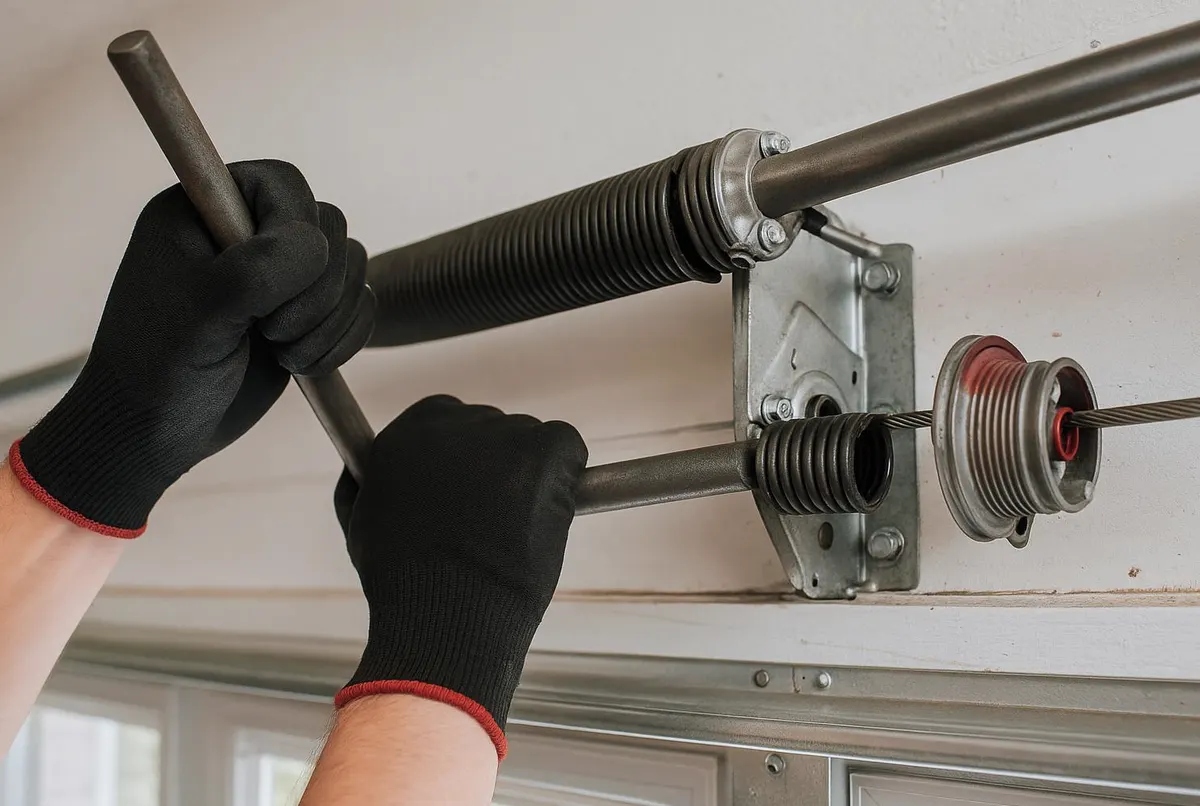
Springs lose a small amount of tension in cold weather, and on a door that was already due for adjustment, that's enough to make the opener do more work than it's built for. This shows up as a door that the opener can lift but with visible strain, or a door that's noticeably heavier when lifted by hand. A technician checks spring tension by testing how the door balances when disconnected from the opener. If a spring is actually worn out rather than just cold-affected, replacement is the only real fix, and it's not a DIY job given how much force is stored in a wound torsion spring.
5. Opener Force and Limit Settings
Modern openers have safety sensors that stop or reverse the door if they detect more resistance than expected. Cold-stiffened rollers or tight tracks can trip that safety feature even when nothing is actually broken. The fix here is recalibrating the opener's force and travel limit settings once the mechanical causes above have been addressed, not just cranking up the force setting to push through a problem.
6. Worn or Hardened Weatherstripping
Weatherstripping that's already cracked or compressed from sun, pollen, and humidity over the years gets stiff and brittle in cold weather, which changes how the door seats and can cause it to catch unevenly at the bottom. Replacing the bottom seal is inexpensive and straightforward, and it also helps keep pine debris and moisture from pooling against the door in the first place.
When to Call Havelock Garage Door
If you've broken the ice seal and the door still won't move smoothly, or if you hear grinding from the spring area, stop using the opener and call us. That's usually a sign of spring tension loss or a track alignment issue, not something to force through. Our Garage Door Maintenance visits cover lubrication, track alignment, and spring tension checks before cold weather becomes a recurring problem, and our Emergency Garage Door Service handles the door that's stuck shut the morning you actually need to leave.
If your garage door is fighting you every time the temperature drops, give Havelock Garage Door a call. We serve homeowners throughout Havelock, New Bern, Morehead City, and the rest of Craven County, and we'll get your door moving the way it should before the next cold snap rolls through.